
Employee Turnover: How to Calculate it and Keep your Best People
Employee turnover is hitting businesses hard right now, and you’ve probably felt it yourself. More people are open to new opportunities, talent pools are drying up in key industries, and plenty of leaders still aren’t sure what’s actually causing employees to leave. It’s a difficult mix, but it’s not unmanageable.
If you take time to understand what’s behind the exits, you can flip the script. By getting honest about what workers want and building systems that support them, your company can stop scrambling to fill roles and start building teams that stay for the long haul. Just remember, the goal isn’t just to hold onto people: it’s to become the kind of workplace they don’t want to leave.
Employee Turnover Rate vs. Retention Rate
Turnover and retention are two sides of the same coin. Your retention rate tells you how many employees stayed over a given period, while your turnover rate tells you how many left. If your turnover rate rises, your retention rate has dropped, and vice versa.
When you monitor both metrics regularly, it becomes easier to understand whether your workplace is holding onto talent or pushing it out the door. High turnover usually signals underlying problems that deserve attention. By keeping retention and turnover figures side by side, you give managers a quick way to evaluate how well your people strategies are working.
Voluntary vs. Involuntary Turnover
Not every employee exit is the same. Some choose to leave on their own terms, while others are asked to go. Voluntary turnover happens when an employee resigns. Maybe they accepted another job, need a change of pace, or no longer feel aligned with their role. High voluntary turnover can be a red flag. It might mean your culture, compensation, or career growth opportunities aren’t where they should be.
Involuntary turnover, on the other hand, refers to exits driven by the employer. These include layoffs, firings, and position eliminations. While sometimes necessary, too much involuntary turnover may indicate poor hiring decisions, problems with performance management, or issues with your core business model. Keeping a close eye on both types of turnover helps you understand what needs to change to keep your best people around.
Calculating Employee Turnover
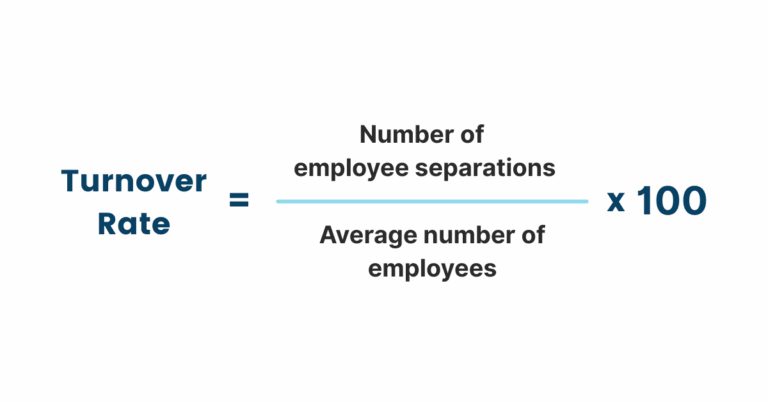
To figure out your employee turnover rate, start by choosing a time frame: monthly, quarterly, or annually. Then divide the number of employees who left during that period by the average number of employees on staff over the same time frame. Multiply the result by 100 to turn it into a percentage.
Here’s the basic formula:
Turnover Rate = (Number of employee separations ÷ Average number of employees) × 100
Let’s say your company had an average of 150 employees over last year and 30 team members who left. Divide 30 by 150, then multiply by 100. That gives you a 20% turnover rate for the year.
Looking at company-wide turnover is a start, but you’ll get deeper insights by zooming in. Run the numbers for specific departments, roles, or office locations. You can also track changes month over month or quarter over quarter. If you notice a sudden spike in turnover, ask what changed. Was a new policy rolled out? Did a leader leave? The goal is to spot and mitigate emerging trends before they become costly patterns.
Once you have your rate, compare it to benchmarks in your industry. That context helps you know where your company stands and where it needs to improve.

What is a High Turnover Rate?
Turnover is inevitable. People move, change careers, or retire. In most professional environments, a turnover rate between 10% and 15% is considered normal. For some industries, like hospitality or retail, turnover tends to run higher. But in general, when more than 20% of your workforce leaves within a year, it’s time to pay attention. That level of churn puts pressure on your hiring pipeline, drains institutional knowledge, and can send ripple effects through team morale.
If your company’s rate consistently exceeds industry or competitor benchmarks, you may be looking at a systemic issue. Maybe your onboarding isn’t sticking, your managers aren’t engaged, or the work environment isn’t supporting long-term growth. Identifying what’s causing the problem is the first step on the path to fixing it.
The Causes of High Employee Turnover
If you’re seeing too many people walk out the door, it’s time to take a closer look at what’s pushing them to leave — and what might be missing from their experience at work. That means going beyond assumptions and digging into real data: exit interviews, employee surveys, retention by manager, and turnover by role. Once you know why people are leaving, you can finally start giving them better reasons to stay.
According to research, poor management is one of the most common contributors to high turnover. If employees don’t feel supported by their managers, or when expectations constantly shift without explanation, they disengage. Companies need leaders who are trained to coach, recognize success, and resolve conflict.
Employees who feel their career growth is limited are also more likely to leave an organization. Team members want to work at companies that offer clear paths for advancement and provide access to a range of valuable learning opportunities. This tells workers that the business is truly invested in their long-term success.
Studies show that toxic culture and burnout are also common drivers behind turnover. If a workplace feels tense, cliquish, or unwelcoming, team members check out. They’re also more likely to leave if they feel their workload is too heavy and their work-life balance is not where it needs to be. But they commit to organizations that show they value team members for who they are as people.
Uncompetitive pay and benefits round out the list. Employees appreciate a compelling mission and a great team, but they still react to compensation they perceive as below-market. Thankfully, HR partners can help you offer and administer a compelling suite of benefits while keeping your costs low.
6 Steps to Reduce Employee Turnover
If you want people to stay, you have to convince them. That means creating a workplace where employees feel valued and supported. These six steps can help you reduce turnover and build a more committed team.
Why Employees Leave and What You Can Do About It
- Recognize people — quickly and consistently. A thank-you two weeks after the fact just doesn’t land the same way. Employees who feel invisible are more likely to leave the moment something better comes along. Real recognition needs to be part of team members’ day-to-day experience, not a box that managers check off during quarterly or annual reviews. You can make it easy for everyone to show appreciation in real time by educating leaders and other team members on the importance of recognition. You should also ensure that leaders follow through in practicing public recognition, serving as an example for others.
- Offer incentives people care about. A competitive salary is only the start. Employees also weigh benefits like hybrid work options, wellness support, learning stipends, and meaningful time off. These extras can make the difference between a team that stays and one that constantly turns over. Instead of guessing what matters, ask. Survey your team to find out which perks actually make a difference and adapt your offerings accordingly. And consider partnering with an HR outsourcing provider like a professional employer organization (PEO) to get the widest range of benefits at the lowest possible price point.
- Track what really drives engagement. If you don’t know what’s working, you can’t fix what’s broken. Every team is different, and assumptions about engagement usually miss the mark. You need real-time feedback and a way to act on it. Meet with team members in various settings, including stay interviews, and use tools that gather employee input and offer leaders robust analytics capabilities. The goal is to surface trends across your company and flag issues before they snowball. When you follow through acting on what people share, trust grows and retention follows.
- Build a culture people want to be part of. No one wants to stay in a stressful, unhealthy environment. If you’re wondering how strong your organizational culture is, ask a few honest questions. How do people treat each other? How do leaders communicate? Do all employees feel like they belong? Promote open conversations on these and other key cultural issues, provide clear pathways for growth, and give managers the tools they need to lead with empathy. Look for small ways to reinforce your values daily, and make sure team-building activities feel authentic, not obligatory.
- Invest in career growth. If employees can’t see a future at your company, they’ll find it elsewhere. Career development doesn’t need to mean expensive training programs or endless promotions — it starts with managers who care and a plan that aligns employee goals with business needs. Offer access to skill-building opportunities and mentorship programs, while ensuring that there are realistic, defined career paths for all roles at your company. Even short-term projects or temporary, cross-functional work can help people expand their skill sets and feel more invested in staying at your company.
- Respect personal time and boundaries. People can’t bring their best selves to work if they’re burned out. High performers are especially prone to overworking, and if leadership doesn’t model work-life balance, no one else will feel like they can — or should — either. Encourage time off and mean it by offering flexible scheduling and mental health resources. Enforce a policy to keep after-hours communication to a minimum as well. When employees feel like their lives are respected, their loyalty only grows stronger.
Partner with ProService to Reduce Turnover and Build a Stronger Team
If your business is struggling with high employee turnover, you don’t have to tackle the problem alone. ProService Hawaii is a professional employer organization (PEO) that brings decades of HR experience and deep understanding of the unique challenges facing employers across the Hawaiian islands. From recruiting and onboarding to benefits administration and compliance, ProService delivers end-to-end HR support designed to keep your best people on board and your business moving forward.
With ProService, you get access to proven retention strategies backed by real data. Their team works with you to create tailored programs that support employee growth and strengthen workplace culture. Whether you need help launching a professional development initiative, building a better benefits package, or understanding what’s driving turnover in the first place, ProService has the tools and expertise to guide you. You’ll also gain insights through modern HR technology and hands-on support that align with your business goals.
Contact ProService today to learn more about how they can help your organization reduce employee turnover and thrive.