
Workers’ Comp Premium in Hawaii: What Actually Drives It
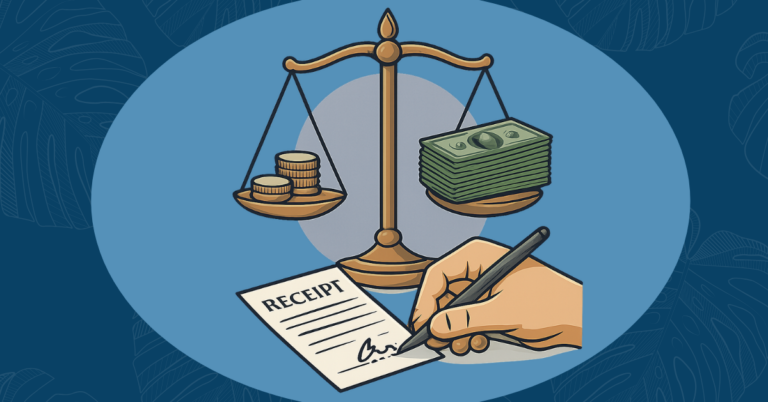
If you employ anyone in Hawaii, you likely already know you're required to carry Hawaii workers compensation insurance. Most business owners only think about their premium once a year, when the renewal bill lands, and that premium cost isn't determined by luck: some of it is fixed, some of it is yours to manage. Here's what shapes your workers' comp premium, and what's worth asking before your next renewal.
Workers' Comp Requirements in Hawaii, and What Skipping Costs You
Coverage is required if you have even one employee in Hawaii, and skipping it can cost far more than a fine. If you're not insured, you're personally responsible for the full cost of a claim: medical care, wage loss, and disability benefits, with no cap and no insurer to help. On top of that, the state can fine you a minimum of $500, or $100 per employee per day. Employees can also sue you directly, and the state can issue a stop-work order that shuts your business down until you're covered.
The requirement doesn't stop at the office, either. If you have even one employee working from home in Hawaii, you're still required to carry coverage for them.
Most employers already know coverage is required. The bigger question is what's actually driving the premium on the policy you already have.
How Your Workers' Comp Premium Is Calculated in Hawaii
Part of your premium is set for you. Part of it is yours to manage.
Fixed, not your call:
- Classification code. The risk category assigned to the work your employees do, set by the state.
- Payroll. More covered payroll means more premium. Get it right, since errors cause problems at audit.
- Medical and wage inflation. Rising costs push rates up nationally, which is why a clean claims year can still bring an increase.
One factor you can manage:
Your Experience Modification Rate, or EMR, compares your claims history to the average business of your size, in your industry. A 1.0 is average. Below that costs you less. Above it costs you more.
EMR is based on your last three policy years, not only the most recent one, so one bad year can affect your rate across several renewals rather than just the next. Stay claim-free for a few years, though, and your EMR can drop by 10 to 20 percent, along with the premium tied to it.
For a fuller breakdown of how each factor works, ProService's guide to smarter workers' comp in Hawaii walks through the mechanics in more depth.
Five Questions to Ask Before Your Workers' Comp Renewal
Bring these to your carrier or PEO before your next renewal conversation:
- Do you know your EMR trend over the last few years, or only today's number?
- Have your classification codes been reviewed recently, to confirm they still match the work your employees actually do?
- Do you know whether any safety-related credits are available on your policy?
- Does your current carrier or PEO stay engaged on a claim from start to finish, or hand it off partway through?
- Do you have a written safety and health program, customized to your operations? Hawaii law requires one if you have 10 or more employees, and many employers don't find out until an inspection turns it up.
How ProService Approaches Workers' Comp Differently
Most Hawaii employers get workers' comp through a traditional carrier—a policy managed for you, not with you. ProService is built differently in two specific ways: who owns the risk, and how the premium actually gets billed.
Owning the Risk, Not Just Pricing It
A traditional carrier prices your policy using your classification code and an industry benchmark, then groups your claims in with every other business it insures, spreading the cost across all of them. ProService does it differently. ProService owns their captive, the insurance company, that manages workers' comp risk itself. It's the only fully owned workers' comp captive in Hawaii.
That ownership changes the incentive on both sides. Your rate reflects your own loss history, not an industry-wide average, and because ProService is financially responsible for the same claims it's managing, the team is just as motivated as you are to keep the workplace safe and the claim under control. The investment in a safer workplace and reduced risk is shared between you and ProService.
Pay-As-You-Go Billing
Most carriers price your policy off an annual payroll estimate set at the start of the year, and estimates are rarely exact, because the pricing isn’t based on real-time payroll. That's where the true-up bill comes from, a follow-up bill (or refund) that closes the gap between what you were estimated to owe and what your actual payroll turned out to be.
Because ProService already runs your payroll, workers' comp premium is pay-as-you-go, calculated from actual payroll every time you run payroll instead of an estimate. There's no true-up bill waiting for you at the end of the year, and nothing to sort out later, since the number was accurate the whole time.
Prevention That Pays Off Twice
The same incentive in owning the risk shapes prevention too. Clients enrolled in ProService's proprietary Safety Up program see injury rates drop more than 40 percent after one year, and more than 60 percent after two. Safety Up includes on-site inspections, employee training, and a written safety program built for the business, all at no additional cost.
When an injury does happen, the goal shifts to getting the employee back to work. Ninety percent of workers released to light duty return to the job, either with their employer or through ProService's Alternative Light Duty program. Staying connected to work usually means a faster recovery, a supported worker, and a lower claim cost.
Lower Your Workers' Comp Premium Over Time with ProService
Your workers' comp premium isn't as fixed as it looks on the renewal notice. Your EMR, the one factor you can actually move, comes down with fewer claims, active claims management, and a documented safety program. Ready to work with a partner who prices, manages, and pays out that risk alongside you, and helps bring your rates down over time? Talk with ProService about your workers' comp coverage.
This ruling also knocks down similar laws in California, Maryland, New Jersey, and New York, which had the same “ask permission first” structure. The other 45 states already work the way Hawaii now does, so nothing changes there. We recommend multi-state employers conduct a nationwide audit of workplace firearms policies and signage to ensure consistent standards across all locations.
Your workers' comp premium is calculated from a few factors: your classification code, the risk category the state assigns based on the work your employees do, your payroll, and your Experience Modification Rate, or EMR, which compares your claims history to other businesses your size, in your industry. Classification code and payroll are fixed. EMR is the one factor you can actually influence, through fewer claims and a documented safety program.
If you have even one employee working from home in Hawaii, you're required to carry workers' comp coverage for them. The requirement isn't limited to employees working on-site.
Most carriers price your policy off an annual payroll estimate set at the start of the year, and estimates are rarely exact. At the end of the policy term, your actual payroll gets reconciled against that estimate, which is where a true-up bill (or refund) comes from. ProService bills premium off actual payroll every pay cycle instead, since it already runs payroll for the same clients, so there's no estimate to reconcile later.
State employment laws, HIOSH and OSHA compliance requirements, and workers' compensation rules change frequently. Employers should consult qualified legal counsel or a certified safety professional before making compliance decisions. This post is for informational purposes only.