Natural Disaster Preparedness for Hawaii Employers
Here’s how to prepare your business and care for your people before, during, and after a natural disaster.
Planning for Natural Disasters in Hawaii
Hurricanes, tropical storms, flash floods, and other natural disasters are an unfortunate and inevitable part of life on the islands, and they don’t follow one calendar. The Central Pacific hurricane season typically runs from June 1 to November 30, and should be planned for. Wildfires and flash floods can happen year round. Preparation can’t prevent a disaster but it can ensure your people know they’re looked after when an event occurs.
Before a Disaster: Make the Hard Decisions Early
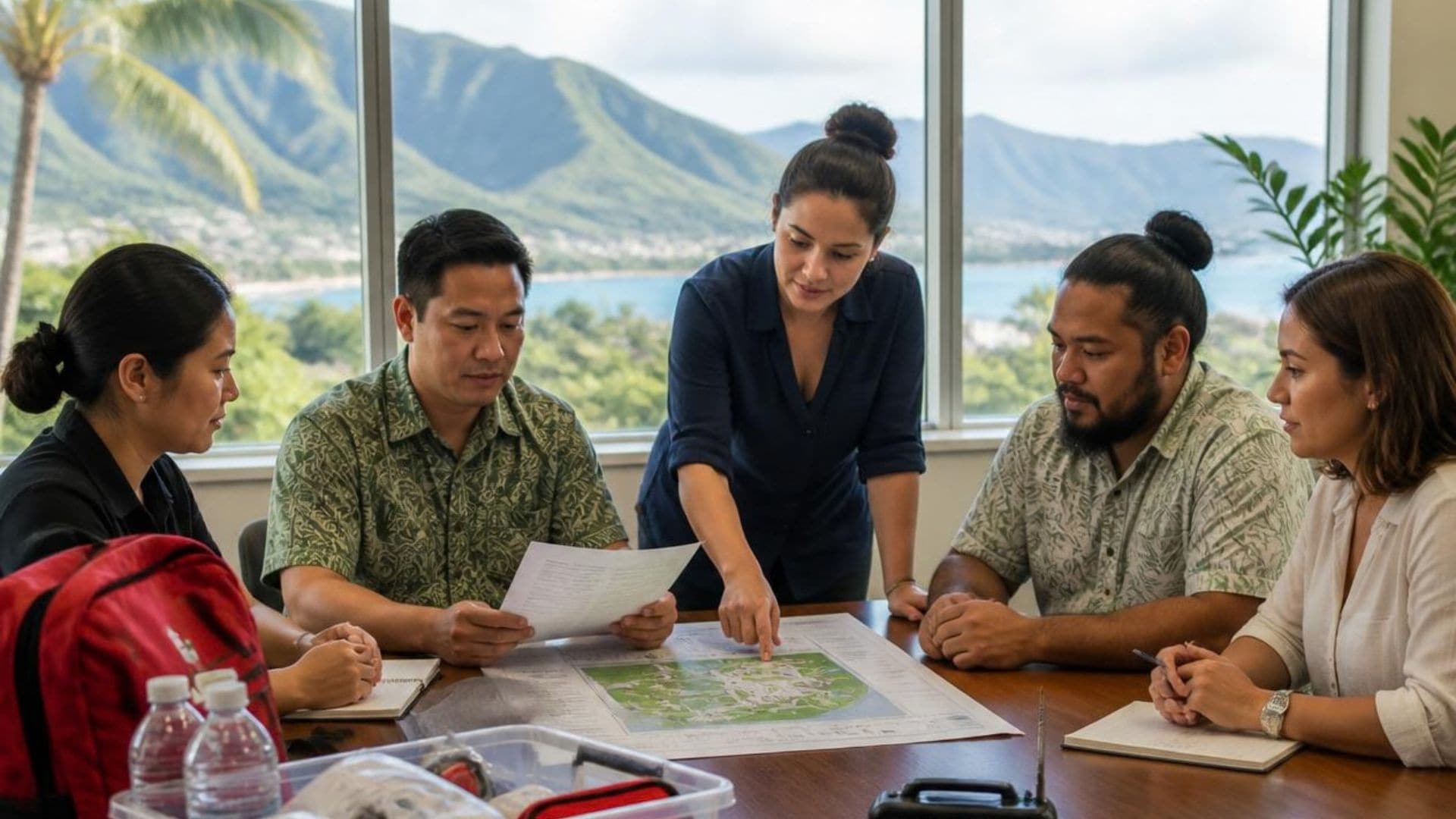
When there’s no time to think, a plan is how you take care of people, and it can come down to three things for your business.
- A current contact list. Personal cell numbers, emergency contacts, and a backup channel like a group text that still works if email doesn’t. Confirm it at least once a year so no one is missed.
- Clear closure triggers. Decide who makes the call to close, which conditions prompt it (a hurricane warning, an evacuation order, a flash flood warning, a road closure, a power outage), and how employees will hear about it. No one should have to guess whether it’s safe to drive in.
- Pay decisions made in advance. Decide how you’ll handle pay for canceled shifts, so no one is left wondering how they’ll cover their bills.
If your workplace already has an emergency action plan, start there. Some employers are required to have one under HIOSH rules, and employers with more than 10 employees must keep it in writing.
Other ways to prepare:
Back up payroll and HR records to the cloud, photograph your space and equipment for insurance, and show employees where to find the emergency plan.
Share your county’s official emergency page too, and encourage everyone to sign up for local alerts so they and their families get warnings as early as possible:
- Statewide: Hawaii Emergency Management Agency. Alerts come from each county, and HI-EMA’s Get Alerts page links to all four.
- Oahu: Honolulu Department of Emergency Management. Sign up for HNL Alert, or text HNLALERT to 888777 for urgent alerts.
- Maui, Molokai, and Lanai: Maui Emergency Management Agency. Sign up for MEMA Alerts.
- Hawaii Island: Hawaii County Civil Defense Agency. Sign up online, or text HAWAIIALERTS to 888777.
- Kauai: Kauai Emergency Management Agency. Sign up for ALERT Kauai, or text KAUAIEMA to 888777.
During a Disaster: Put People First
When a warning or evacuation order goes out, lead with care. Your first message should ask whether everyone is safe and whether anyone needs help. After that, answer the questions employees will be carrying: whether to come in, whether they’ll be paid, and when they’ll hear from you next. Even “we’ll update you tomorrow at 9 a.m.” gives people something steady to count on.
Keep updates short and on a schedule. Some employees may be evacuating, caring for family, or without power, and they shouldn’t have to keep checking their phones for news.
Many of your employees will be worried about their homes and their paychecks at the same time. Knowing the basic pay rules helps you give them clear answers quickly:
- Nonexempt (hourly) employees generally only need to be paid for hours actually worked. If someone shows up and waits before learning there’s no work, that waiting time must be paid.
- Many employers choose to cover scheduled shifts during short closures anyway, and that can mean a lot to a family stretching every dollar.
- Exempt (salaried) employees generally must receive their full weekly salary for any week in which they do any work.
- If the business is closed for a full workweek and they do no work, that week’s salary isn’t required.
- Some employers draw closure days from exempt employees’ accrued PTO. Check with your own HR team or ProService before doing this.
Whichever path you choose, apply it consistently, put it in writing, and share it as early as you can.
ProService clients: You don’t have to work this out alone. Reach out to your assigned service team, and we’ll help you put a plan in place ahead of any forecasted storm or disaster.
After a Disaster: Support Your Team Through Recovery
Recovery looks different for every person and family. Some employees may be dealing with damaged or lost homes, displaced relatives, or kids out of school. Flexible schedules, patience, and an easy way to notify you of their needs can make coming back to work feel possible. Before anyone returns, make sure the workplace is safe, checking for downed lines, water damage, mold, and smoke or ash.
A few other ways to support your team:
- Time off. Remind employees of the PTO and sick leave they have. If someone has used it up, or has no leave that protects their job, consider a personal leave of absence so they don’t have to choose between their home and their job.
- Employee Assistance Program (EAP). If you offer one, remind everyone how to reach it. Many people won’t remember they have one until someone tells them.
ProService clients: Your ProService team can walk you through leave options and help with the harder conversations about schedules and time away. Contact your assigned team for help or call (808) 394-8878.
Point employees to the support that fits what they’re facing:
- Aloha United Way 211. One call or text can connect employees to shelter, food, and financial assistance. Dial 211 from anywhere in Hawaii, or call or text (877) 275-6569. Specialists are available 7 a.m. to 10 p.m., seven days a week.
- Unemployment insurance. Employees whose hours were reduced or eliminated because of a disaster may apply for UI benefits. They can file online through the DLIR claims portal. Those who worked reduced hours may qualify for partial benefits if they earned less than their weekly benefit amount, and the first $150 they earn doesn’t count against them. Hawaii has a one-week waiting period, so if your business closes for less than a week, employees may not receive a payment for that time. Letting them know early helps them plan.
- Disaster Unemployment Assistance (DUA). When a Presidential major disaster declaration includes individual assistance, DUA can cover workers who don’t qualify for regular unemployment, including self-employed people.
- Relief for businesses. A federal declaration can open up SBA disaster loans and IRS filing extensions for affected areas. State and county emergency orders can also waive certain fees and penalties, as Kauai’s did for Hurricane Lowell recovery.
Share these resources early, in the same channel you used during the event. It’s one less thing your team has to figure out on their own.
We're Here for You
We are always hoping you and your ohana stay safe. We’re here to help. Whether it’s a hurricane, a wildfire, or a flash flood, a plan you make on a calm day helps you focus on your people when it matters most. No scrambling for phone numbers, no guessing about plans.
ProService clients: In the event of a disaster, we process unemployment claims on your behalf, so your team doesn’t have to work through the system alone. Contact your assigned team for help or call (808) 394-8878.
Not a client yet? If you’d like this kind of support in the future, reach out to our team. We’re here to help local businesses succeed.
This post is general information, not legal advice. Pay and unemployment rules can change after a disaster declaration, so check current DLIR and U.S. Department of Labor guidance or talk with a qualified professional about your situation.