
Healthcare Payroll Operations for Hawaii Employers
Summary
Healthcare payroll operations for Hawaii employers are about getting clinical and care teams paid accurately when schedules, differentials, overtime rules, and approvals get complicated. Hospitals, clinics, long-term care, and community health settings stack federal wage and hour rules, Hawaii requirements, facility policy, and sometimes union agreements all at once [8]. Employers often search under “payroll software for healthcare,” but the work that matters is the people, process, and coverage behind the pay cycle—not a product demo.
What Healthcare Payroll Operations Must Handle
A healthcare payroll operation has to mirror how clinical and care teams actually work. Regular wages and basic overtime are only the start. Most facilities need sharper rules for shifts, units, duties, and approvals—and people who can keep those rules current when staffing changes mid-cycle.
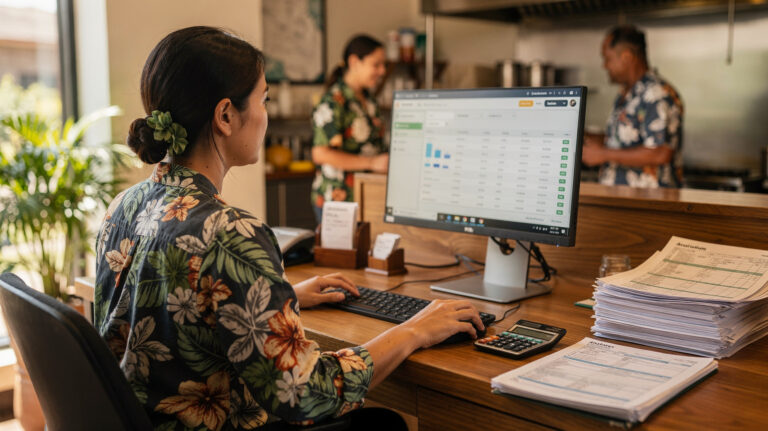
Picture a night charge nurse finishing a long shift on Oahu while a nurse manager still has to approve punches before payroll can close. The payroll lead is not waiting on a feature list; they are checking whether on-call time, a holiday differential, and a late call-back landed in the right pay codes. HR may already be translating a mid-cycle policy change so the next run does not pay last week’s rules by accident. Tools help when they are configured well. Judgment and follow-through still close the pay cycle.
Round-the-clock scheduling means nights, weekends, holidays, on-call time, and call-back work show up often. Different job classifications may carry different pay codes, differentials, or approval requirements. Supervisors need timekeeping records that show when work was performed, approved, adjusted, and paid. Payroll teams need reporting that supports wage and hour review, internal audits, and employee questions. HR needs payroll data that connects cleanly with onboarding, job changes, benefits eligibility, and terminations.
For many facilities, the real question is whether the operation can match how the employer actually pays people—ordinary workweeks and the messier cases: missed punches, extended shifts, training time, temporary assignments, and retroactive adjustments.
For a related services overview, see HR services.
Overtime, Differentials, And Healthcare Work Rules
Healthcare payroll is shaped by the Fair Labor Standards Act (FLSA), Hawaii wage and hour rules, facility policy, and sometimes collective bargaining agreements. Nursing care facilities also have specific federal guidance on how wage and hour rules apply in that setting, including overtime concepts and recordkeeping expectations [8].
On Hawaii healthcare campuses, that often includes union-aware pay texture. Agreements in contexts such as HGEA– or UPW-class collective bargaining can affect differentials, overtime premiums, and related pay practices. Those names are illustrative bargaining contexts, not a claim about any one facility’s contract. When an agreement or local schedule practice changes, someone has to translate the new language into pay codes and test scenarios before the next cycle—payroll, HR, and department leaders together, not a one-time checklist.
- Shift differential
- Extra pay tied to work performed during particular shifts, such as nights, weekends, or holidays.
- On-call pay
- Compensation rules for time when an employee has to stay available for work, depending on the employer’s policy and how much that time restricts the employee.
- Call-back pay
- Pay tied to returning to work after being called in outside the employee’s scheduled shift.
- Regular rate
- The rate used to calculate overtime, which may need to account for more than the employee’s base hourly wage.
When a weekend differential is disputed, the question is rarely abstract. A nurse manager may say the hours were worked on the premium shift; the employee may have a different recollection of the unit assignment; the payroll lead still has to reconcile the record, the policy, and—where a CBA applies—the agreement language before the check is final. Configuration applies the rule once people have agreed what the rule is.
Records, Privacy, And Continuity
Payroll operations hold sensitive employee information, and healthcare employers already operate in an environment where privacy and security get close attention. Access controls, encryption, monitoring, and vendor practices that reduce unauthorized access belong in the operational review, not as an afterthought [2].
Continuity matters too. A ransomware incident affecting a major timekeeping and payroll cloud vendor disrupted payroll for many employers, which shows why backup procedures and incident response planning are practical payroll concerns, not just IT concerns [6].
Privacy review should also look at what information belongs in payroll and what belongs in a separate occupational health, credentialing, or clinical file. Payroll records generally need enough detail to support pay, taxes, benefits, and employment administration, not clinical detail that doesn’t belong there. The payroll lead and HR usually share that boundary work with whoever owns credentialing files.
Credentialing, Staffing, And Job Classification Connections
Healthcare payroll often depends on knowing an employee’s role, credential status, department, and assigned duties. Proposed staffing standards for healthcare facilities show how closely staffing models can depend on classifications such as registered nurses, nurse aides, and unit assignments [1].
Payroll does not replace a credentialing process, but it runs cleaner once job data, schedules, and pay codes line up. If a nurse works as a charge nurse for a shift, or a licensed employee moves between units with different differentials, someone has to capture that assignment before the cycle closes—often the unit supervisor approving time, with payroll confirming the pay code and HR watching the classification stay consistent.
Job classifications should match the employer’s real staffing structure and pay rules. Credential-related roles should be reflected accurately when they affect scheduling or compensation. Training time should be reviewed carefully when attendance is required for the job. Temporary department changes should flow into payroll before the pay cycle closes, and approvals should identify who confirmed the hours, assignment, and applicable pay code.
In-House Coverage Versus A Managed Payroll Partner
Some Hawaii healthcare employers keep payroll fully in-house with an internal team and supporting tools. Others bring in managed payroll or broader HR coverage when the volume of exceptions, union configuration, multi-site differentials, or tax administration outruns what a small team can sustain every cycle.
Either path still needs the same operational spine: represent the employer’s actual schedules, pay codes, differentials, and approval workflows; keep overtime calculations tested and updated when policies or contracts change; track timekeeping exceptions, missed punches, retroactive changes, and manager approvals; maintain privacy, access control, backup, and incident response practices that fit the employer’s risk posture; and connect payroll cleanly with HR, onboarding, benefits administration, and tax reporting.
Testing should include real examples from the organization, not just generic demos. A hospital unit, a long-term care shift pattern, and a clinic schedule can each expose different pay rules and different approval needs. The decision is less “which feature list wins” and more “who owns accuracy, exceptions, and coverage when the schedule gets messy.”
How ProService Supports Hawaii Healthcare Employers
ProService is a Hawaii-based partner for managed payroll and HR coverage. The core offer is people with local expertise who keep recurring payroll, tax administration, onboarding, HR administration, benefits coordination, and related back-office work moving accurately on cycle—supported by tools where they help the operation, not sold as the product.
Here is how that looks when an exception lands. A night-shift nurse’s punch is missing after a call-back, and the weekend differential is in dispute before payroll closes. The nurse manager confirms the hours and unit assignment. A ProService payroll specialist owns the exception: pulls the timekeeping trail, checks the facility’s differential rules (and, where a CBA applies, the agreement language that governs the premium), coordinates with the employer’s HR contact on any mid-cycle clarification, and documents the correction so the employee is paid correctly on this run—not in a later catch-up that creates more questions. Configuration and timekeeping tools support that work; a person still owns the outcome.
For healthcare employers more broadly, that usually means help translating shift differentials, overtime, and exception-heavy schedules into a pay process leaders can trust, with someone accountable when a punch is missing, a differential is disputed, or a policy change needs to land before the next run. Leaders get coordinated coverage across core employer responsibilities, one partner relationship, and human judgment for the moments configuration alone cannot settle.
In plain terms, ProService pairs Expert Care and Exceptional Coverage with the operational support the work requires. The durable question for employers is who will own the operation day to day when the schedule gets complicated.
For a related services overview, see Hawaii payroll services.
FAQ
What does healthcare payroll operations cover for Hawaii employers?
What does healthcare payroll operations cover for Hawaii employers?
It covers calculating and processing pay for clinical, administrative, and support staff in a way that reflects shift work, overtime, differentials, approvals, tax administration, and employment records. The durable question is whether the operation—people, process, and supporting tools—matches how the facility actually pays.
Why is healthcare payroll more complex than standard payroll?
Why is healthcare payroll more complex than standard payroll?
Healthcare payroll tends to be more complex because facilities often run around the clock and rely on nights, weekends, holidays, on-call work, and call-backs. Nursing care facilities also have specific federal wage and hour guidance that employers need to weigh when setting timekeeping and pay practices [8].
How do union pay rules affect healthcare payroll in Hawaii?
How do union pay rules affect healthcare payroll in Hawaii?
Collective bargaining language has to be translated carefully into pay codes, workflows, and test scenarios. In Hawaii healthcare settings, agreements in contexts such as HGEA- or UPW-class bargaining can affect differentials, overtime premiums, and related practices—illustrative contexts, not advice about any one facility. Employers should review that setup whenever an agreement changes or new scheduling practices come into play, whether the work stays in-house or with a managed payroll partner.
Does payroll replace credentialing?
Does payroll replace credentialing?
No. Credentialing stays its own process. Payroll still needs accurate job classifications, department assignments, and pay codes whenever credentials or assigned duties affect scheduling and compensation.
What should employers plan for if timekeeping or payroll tools go down?
What should employers plan for if timekeeping or payroll tools go down?
Plan for access controls and vendor security in normal times, and for backup procedures plus incident response when tools fail. Payroll can be disrupted when a timekeeping or payroll vendor goes down, so resilience is part of the operation [6].
When should a Hawaii healthcare employer consider managed payroll?
When should a Hawaii healthcare employer consider managed payroll?
A practical starting point is listing the employer’s real pay scenarios—differentials, overtime, on-call time, call-backs, training time, and retroactive changes—and asking whether the current team and tools can handle those scenarios accurately every cycle. When exception volume or configuration complexity outruns in-house capacity, managed payroll coverage is often the next conversation.